Chapter 4 defines and elaborates the famous 4 P’s Trying to do their "jobs"? It's not a job. Marketing Mix of the planning process. In 2016 Engro Zarkhez realized it had a problem: the farmers were not willing to pay a premium on its products. What did it do then? It went back to the drawing board and not only redesigned its product (fertilizer) but changed its packaging, drew up new promotion plans and shaped up its new Go-to-Market strategy. It was also able to raise its pricing points and the farmers were willing to pay up. The entire strategy was based upon value creation and value communication, and of course value delivery, which is the essence of marketing (Dr. Aamir Khan, Case Advisor).
Business Department, LSE)
It was a chilly November evening in 2016 when Ali Raza Khan, General Manager Engro Zarkhez Business Unit, received a frantic call from one of his zonal managers where he stated several instances during the past few days where dealers had canceled their order for Engro Zarkhez. For Ali, this was a grave concern as dealers pan-Pakistan were acting in a similar manner and at year-end, the brand’s profitability posed an enormous question mark. Having recently joined, Ali resolved to take Engro Zarkhez to great heights. However, the alarms were already ringing, and Ali had to act fast as he did not want to be in a position where the management would start raising questions regarding the sustainability of the business.
When the Mari Gas field was discovered by Exxon (now named Engro Corporation) in 1957, it envisioned revolutionizing the agriculture and energy sectors in Pakistan. Since then, Engro Corporation has come a long way from its inception, as a fertilizer manufacturing and marketing company, to becoming one of the largest conglomerates in Pakistan. It is engaged in the management of subsidiaries, associations, and joint ventures in fertilizers, PVC resin manufacturing and marketing, food, energy, LNG, maintaining and operating telecommunication infrastructure, chemical terminal, and storage businesses. In 2020, Engro Corporation reported a topline of USD 1,540 million, up by 46% from 2019, and a bottom line of USD 273 million.
Engro Chemicals Pakistan Limited demerged and transferred its core business into a new subsidiary, Engro Fertilizers Limited. Engro Fertilizers Limited Pakistan (EFERT) is one of the most credible brands in agriculture and offers a complete “seed-to-harvest” suite of products which consist of crop nutrition (regular and specialty fertilizers), crop protection
seeds, and another allied agri-business. Today, with a total of 1,360 employees across all its locations, it generates a top-line of USD 655 million and a bottom-line of USD 112 million7 that was achived due to unwavering focus on plant efficiency, engineering excellence, and a turnaround of the Phosphates business as it went from 132,000 MT8 sales in 1H to 465,000 MT sales for the full-year.
However, for its NPK business, matters were critical in 2016 and the brand faced an existencial crisis.
Overview:
The majority of the soils in Pakistan are deficient in macronutrients (Nitrogen, Phosphorous, and Potassium) and micronutrients (Boron, Zinc). This deficiency results in lower yields and poor quality of crops/fruits. The best solution to overcome these issues is balanced fertilization which is given to the crops/orchards in the form of blended NPK fertilizers containing all three major nutrients of Nitrogen (N), Phosphorous (P), and Potassium (K). Conventional fertilizers are single nutrient-based fertilizers such as Urea for nitrogen and DAP for phosphorous.
As Pakistani farmers conform to traditional farming practices, they have a higher tendency to apply Urea and DAPP vis-à-vis other nutrients. Resultantly, farmers are not able to provide balanced nutrition to their crops/orchards and hence, do not obtain optimal yields. This challenge led to a consumer insight to develop a brand that catered to the need for balanced nutrition.
Globally, demand for NPK fertilizers was rising along with farmer awareness. Therefore, in 2000, EFert introduced the brand Engro Zarkhez which was a combination of three major nutrients in balanced proportion (i.e. Nitrogen, Phosphorus, and Potassium) and consisted of 6 variants that addressed different crop needs. Ultimately, after many iterations based on consumer feedback, Engro Zarkhez was reduced to two main variants – Engro Zarkhez Green and Engro Zarkhez Blue.
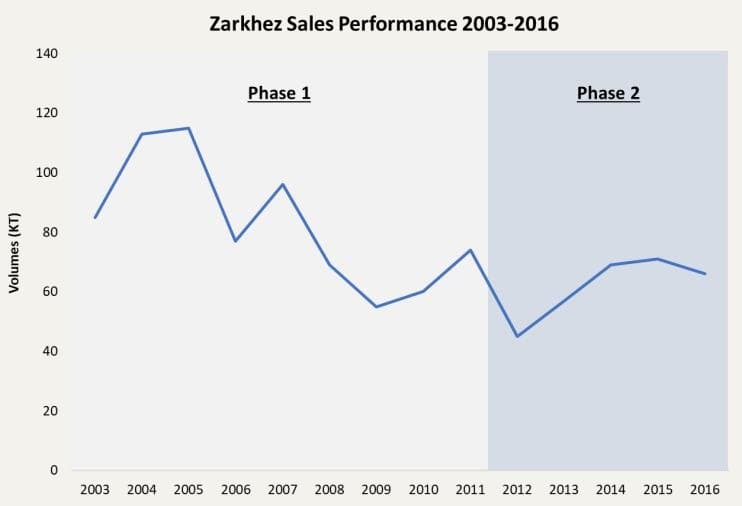
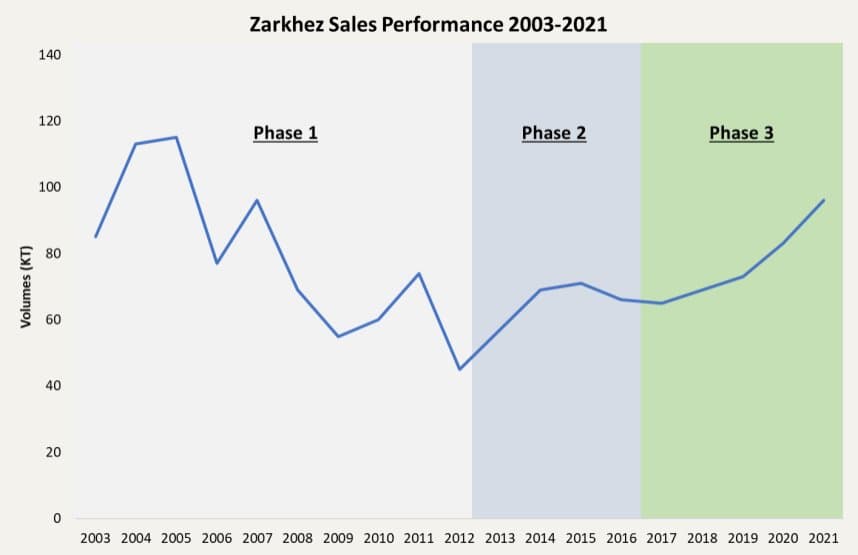
After its launch, Engro Zarkhez did well for the first few years. However, because of issues with the product performance in the field and its marketing strategy, the brand began to struggle, resulting in inconsistent growth and unstable sales volumes that fell to 58,000 MT in 2016 from 115,000 MT in 2003. Although the period of 2013-2015 witnessed volumetric growth of 25%, sales volumes dropped in 2016. Margins were under tremendous pressure which resulted in Engro Zarkhez making its highest-ever loss which raised concerns of the top management.
The Engro Zarkhez Bottleneck:
The financial review of 2015-2016 fed into the management’s doubts and concerns over Engro Zarkhez’s performance. Sales for Engro Zarkhez had declined by 13% from 2015, bringing the market share down to 40% from 50%. Putting Engro Zarkhez under a microscope revealed two major problems that the brand had to overcome.
First, farmers were reluctant to pay a premium for Engro Zarkhez. The expected utility and benefits of using Engro Zarkhez were not realized by the farmer and the only known benefit was that it allowed a convenient application method which, as per the farmer, was not cost-efficient. The consumer value proposition was weak as it did not give farmers higher tangible benefits versus straight fertilizers. The farmers were disinclined to pay a premium of 13% for a combination of nutrients that was available at a much lower cost in the market in the form of straight fertilizers.
Secondly, for farmers, yield levels were not sufficient to justify the higher premiums paid. Initially, the application of Engro Zarkhez caused the yield to increase in the range of 3% to 5% as opposed to the same amount of Nitrogen, Phosphorus, and Potassium being applied separately. Farmers did not associate this nominal increase with Engro Zarkhez as several external variables (suitability of weather, water availability, etc.), could cause such variations in the farm output. This deviation in dosage proved costly for farmers as they struggled to pay a higher premium without connecting the dots.
Armed with this farmer feedback, Ali Raza and his team set out to resolve the problem and rejuvenate Engro Zarkhez.
The Turnaround for Engro Zarkhez:
To make the turnaround, it was vital to revisit the drawing board and make fundamental changes. From product development to distribution, Engro took measures to ensure all facets of the brand were revamped to resolve the bottlenecks that existed.
Product Development
Realizing the need of the market, the brand worked towards improving the product so that it may help produce high returns in yield and farmer revenue. The brand-initiated research in 2015 which then accelerated to extensive R&D trials in 2016 with a deadline to deliver in 2017.
As a result, the first value-added fertilizer, Engro Zarkhez Plus, was launched in September 2017 and replaced Engro Zarkhez Green. While the initial version of Zarkhez Green was just a combination of N, P, & K; the newly launched Engro Zarkhez Plus offered the addition of bio-stimulants and organic fillers to the combination. This addition meant that the efficacy of the nutrients in the soil increased, and farm yields improved when you applied Engro Zarkhez Plus. It was primarily applied on field crops such as rice, sugarcane, potato, maize, cotton, and wheat and worked wonders for them. For example, applying it to sugarcane resulted in higher sucrose content and taller canes; and it translated into potatoes that were heavier in weight, bigger in size, and highly saleable.
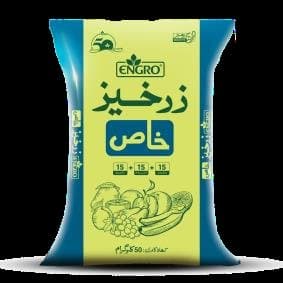
As research continued, Engro Zarkhez Blue was replaced with Engro Zarkhez Khas which was designed specifically for orchards such as citrus, mango, banana, apple, and grape. The addition of Boron and Sulphur in Engro Zarkhez Khas led to an increase in ‘A-Grade’ produce. Using Engro Zarkhez Khas resulted in shinier fruits and yields that had high exportability potential.
The brands, with their revamped images, resonated more with consumers, offered superior performance, and provided incremental yields of 10% to 15% versus the same ratios of NPK applied separately. In 2020, the brand further collaborated with Fertinagro of Spain for research purposes and obtained access to Blendcoat which was a patented technology. This material coating enabled the product to better use nutrients and improve overall soil health.
Consumer Segmentation and Targeting
As a strategy, Zarkhez focused on product consumption through progressive farmers only rather than targeting all the farmers. These farmers were educated, with a penchant for gaining more knowledge to improve their yields and livelihood. Being experimental in nature, they sought to find nutrients best for their yields and were aware of the importance of Potassium to their crops. Hence, the new Zarkhez brands were received with enthusiasm by the progressive farmers.
Promotion and Packaging
Repositioning the product was a major task as farmers had to transition from a cost-based mindset to a benefit-based approach. Where traditionally farmers purchased fertilizer based on the comparison with other fertilizers, they were now being encouraged to base their decisions on cost-to-value ratio, where they would weigh in the perceived value gained as opposed to the costs incurred. The brand had to channel efforts into developing the market for Potassium. The promotion was completely revamped to focus on making farmers realize the importance of balanced nutrition.
The first changes occurred in packaging to ensure farmers were disassociated with the negative perceptions of older Engro Zarkhez Green and Engro Zarkhez Blue, and developed new associations with Engro Zarkhez Plus and Engro Zarkhez Khas.
Zarkhez Blue Zarkhez KhasZarkhez Blue Zarkhez Khas
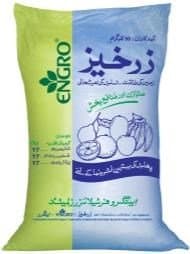
Zarkhez Green Zarkhez PlusZarkhez Green Zarkhez Plus
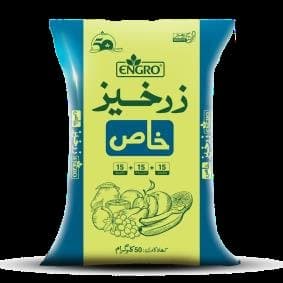
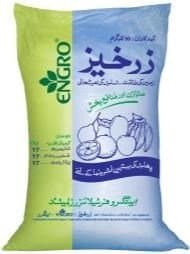
In accordance with the packaging, the brand message and tagline had to be changed. Communication was then changed from “Zarkhez ki sifaarish karda miqdaar ka faida, munafa milay kharch se kaheen zyada” to “Zarkhez ka kamaal, izaafi paidawar, aala miyaar”. The new tagline functioned as a useful hook that emphasized two variables of high importance to farmers – incremental yield and high-quality produce that would serve to create immense value for the farmer in return for the investment they made. This would consequently lead to brand bonding where farmers experienced the company delivering on its brand promise.
Repositioning of Engro Zarkhez was communicated through massive BTL campaigns that tapped into each of the customer journey touchpoints of farmers and dealers alike. The brand focused on farmer engagement through market development activities which consisted of one-to-one farm visits, one-to-many mega farmer meetings, soil sampling, setting up demonstration plots, and Point-of-Sale branding at dealer shops.
Demonstration Plots
To convince potential farmers and increase trial generation, the field team set up demonstration plots where Engro Zarkhez was applied to a comparatively small area of the farmer’s cropped land. Results of this plot would then be compared for yield and quality of the produce with the cropped land that had no Engro Zarkhez application; these results would also then be cascaded to local farmer Whatsapp groups which motivated other farmers to follow suit. Since 2017, the field team has set up 875 demo plots to depict the performance of the product against the brand promise and enabled farmers to observe crop strength and incremental yield per acre.
In accordance with the packaging, the brand message and tagline had to be changed. Communication was then changed from “Zarkhez ki sifaarish karda miqdaar ka faida, munafa milay kharch se kaheen zyada” to “Zarkhez ka kamaal, izaafi paidawar, aala miyaar”. The new tagline functioned as a useful hook that emphasized two variables of high importance to farmers – incremental yield and high-quality produce that would serve to create immense value for the farmer in return for the investment they made. This would consequently lead to brand bonding where farmers experienced the company delivering on its brand promise.
Branded Mega Farmer Meetings
Hosted by influential farmers, branded farmer meetings consisted of seminars organized at the farmers’ own ‘deras’ as a means of engaging with other local farmers of the same vicinity to amplify the brand message. These were attended by a vast majority of the farmer cohort that consisted of both users and non-users. Questions and answers were prompted at the end of the session to remove misconceptions and generally educate the farmers. These activities also fed into the development of a farmer database where field teams could easily track farmer conversion and retention and develop geographically focused marketing activities.
Video Testimonials
The decision tree for farmers purchasing fertilizers is influenced by three major factors – peer farmer recommendation, dealer recommendation, and company recommendation. The recommendations from other farmers or ‘kisaan bhai’ embodied the best form of word-of-mouth referrals and to tap into this, Engro Zarkhez was set to develop video testimonials. The best ambassador farmers were identified and asked to share their experiences regarding the benefits of new and improved Engro Zarkhez as well as the attributes of the crop/orchard of the season. Formalized versions of these testimonials, called infomercials, were then floated on mainly Facebook and WhatsApp. Additionally, field teams were continuously involved in developing short snippets of the influential farmers in their territories which were then floated to their farmer circles of 3,000 farmers on WhatsApp.
Digital Campaigns
On the digital front, Engro Zarkhez engaged farmers through social media campaigns. Seasonal campaigns were heavily boosted on digital platforms of Facebook, YouTube, and WhatsApp which enabled the brand to amplify its reach to not just users but all farmers who had interests in agriculture. Major elements utilized to engage farmers were video infomercials, interactive consumer schemes, and lucky draws. With over 15 infomercials developed in 2020, Engro Zarkhez was able to disseminate its brand message through agricultural influencers in the digital landscape and collect relevant audience insights from the campaigns of 2020 to create future targeted campaigns. With all this marketing support in place, farmers also had the option to seek guidance through Rahbar, a toll-free helpline that would connect farmers directly to the field teams.
Go-to-Market Strategy
To set this repositioning into motion, Engro Zarkhez changed its route-to-market which would enable field teams to cultivate farmer consumption and manage time more effectively. Initially, the product flowed from the company to large dealers who operated as traders and sold to other smaller retailers and farmers.
As a specialty brand, Engro Zarkhez needed more efforts in pushing the brand to the market and could not be sold as per traditional channels that were more suited to undifferentiated commodity fertilizers.
The brand shifted focus away from larger dealers and sought to sell directly to potential retailers in the channel (dealer network) who were actively involved in direct farmer sales and advisory services to farmers. These retailers helped in marketing the product, informing, and creating awareness about the usage of the right amount of nutrients, and clearly communicating the product benefits. The entire channel reward process was revamped with a combination of quarterly and annual incentives subject to dealers achieving their target volumes. The essence of this model was to track dealer performance against targets based on individual dealer potential, allowing them to earn better returns and subsequently, increasing their yearly engagement with Engro Zarkhez.
Once this strategy was in place, the field team invested 30% of their efforts in the channel and 70% in demand generation and consumption of the same product at the farmer’s end. Instead of pushing the product into the market, the field team was prepared to aim at a pull strategy. To successfully generate demand, field teams banked on farm visits (one-to-one), farmer meetings (one-to-many), demo plots, and soil sampling activities.
Pricing
Evidence from successful results of R&D trials proved that Engro Zarkhez could demand a higher price due to its superior performance in terms of incremental yield and higher quality farm output. From 2018 to 2021, Engro Zarkhez premiums have risen from 13% to 20% and farmers are willing to pay them due to the excellent results they achieve. Changing the conversation from ingredient-based pricing to a complete consumer value proposition enabled users to derive value from the brand. Farmers are willing to pay higher premiums as they see the benefits of using the brand.
Creating a Long-Lasting Impact:
Engro Zarkhez focused on the change in the formulation and change in its positioning strategy which led the company to grow.
From 2017 to 2021, Engro Zarkhez topline showed steady growth across various parameters where volumes increased from 60KT to 100KT while margins grew with a CAGR of 29%. During the same time, the channel engagement of Engro Zarkhez increased and farmer retention grew from 20% to 90%.
Questions to stimulate conversation on the case
- What are the most critical factors that contributed to the brand’s success during the Repositioning?
- Elaborate on the product and pricing strategy that the company adopted or should have adopted for the relaunch?
- Develop and discuss the next phase of the brand’s Integrated Marketing Communication program?
- How can the brand carry out effective social media campaigns?
Links and media
Website: https://www.engrofertilizers.com/